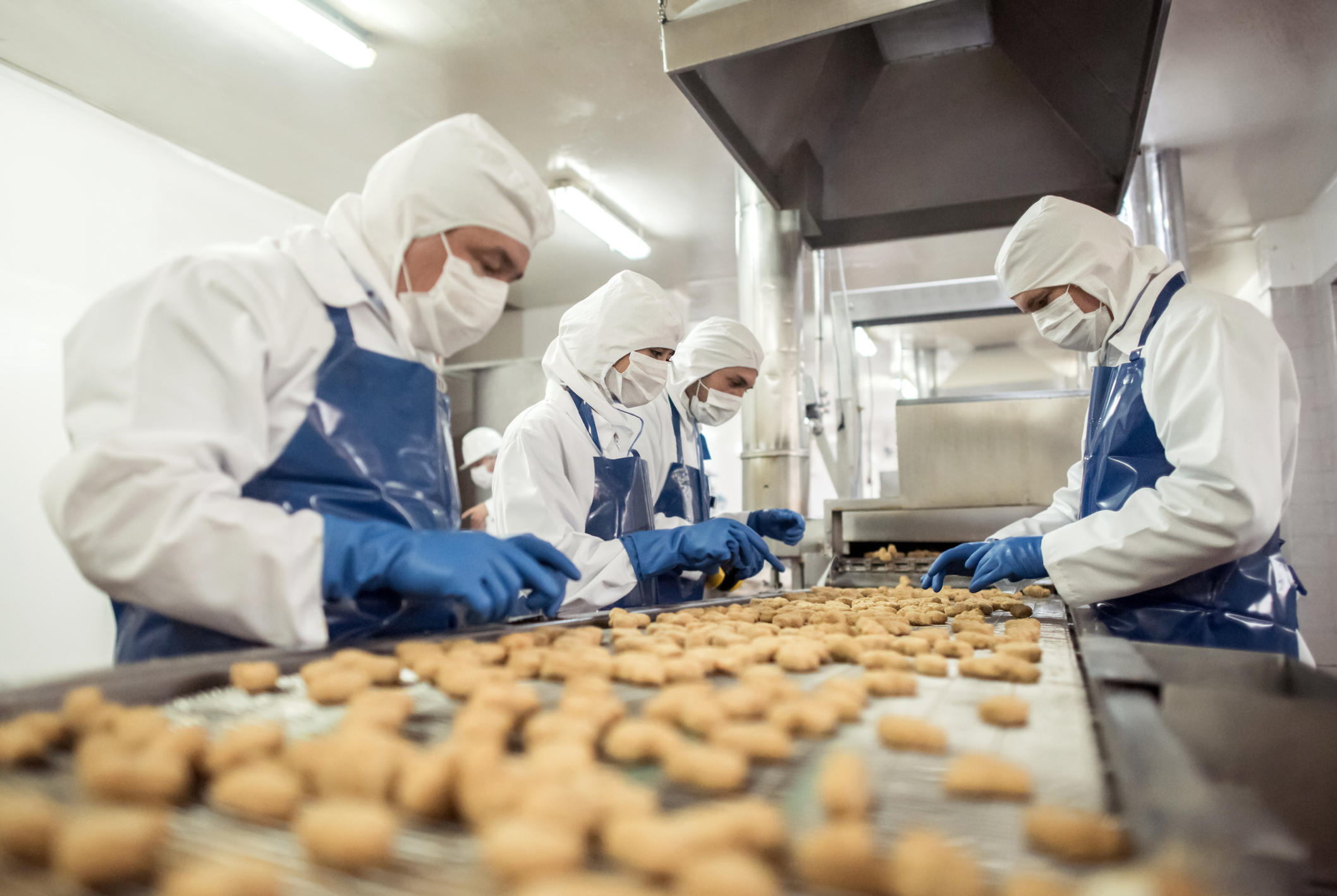
Raw material handling and storage
Automated storage and retrieval systems manage ingredient inventories efficiently. Robotic systems handle bag opening, dispensing, and batching. Precise weighing ensures recipe consistency, critical for quality and compliance.
Processing and cooking
Automated systems control cooking temperatures, mixing times, and critical parameters with precision. This ensures quality whilst reducing energy consumption. In complex production processes, automation ensures perfect synchronisation.
Packaging operations
High-speed packaging systems fill containers, apply labels, seal packages, and perform quality checks at thousands of units per hour. Modern lines allow quick changeovers between formats, supporting product variety.
Quality inspection
Automated inspection systems examine products for defects, verify weights, check seal integrity, and detect contaminants. X-ray and metal detection identify foreign objects, whilst vision systems assess colour, shape, and surface defects continuously without fatigue.
Palletising and distribution
Robotic palletisers stack products efficiently. Automated guided vehicles (AGVs) move products through facilities without manual handling. Automated storage optimises warehouse space and facilitates FIFO inventory management.
Smart food factories and Industry 4.0
The smart food factory represents the convergence of automation in food processing with digital technologies, transforming traditional facilities into connected, intelligent ecosystems.
Connected production systems
Machines, sensors, and systems communicate seamlessly. Production data flows in real-time to cloud-based platforms where analytics identify optimisation opportunities. Operators access dashboards showing key performance indicators. This connectivity extends to suppliers and customers, creating integrated supply chains.
Artificial intelligence and machine learning
AI algorithms analyse production data to optimise processes automatically. Machine learning systems predict quality issues, adjust parameters to compensate for ingredient variations, and schedule maintenance optimally. These systems continuously improve, learning from each production run.
Digital Twins and simulation
Digital twins create virtual replicas of production lines for testing process changes, new products, and equipment configurations without disrupting production. This reduces innovation risk and cost whilst accelerating time-to-market.
Real-time monitoring and control
Smart food production systems provide unprecedented visibility. Managers monitor production from anywhere, receiving alerts when parameters deviate. This enables proactive management and faster problem resolution.
Enhanced traceability and transparency
Industry 4.0 technologies create comprehensive traceability from ingredient sourcing to final delivery. Blockchain integration provides immutable records that build consumer trust and facilitate rapid, precise recalls.